
Artificial intelligence is rapidly changing the fitness industry, creating new opportunities to improve how businesses operate, how teams work, and the member experience. As AI in fitness becomes more accessible, one question is becoming increasingly important for fitness operations: Where should you actually start?
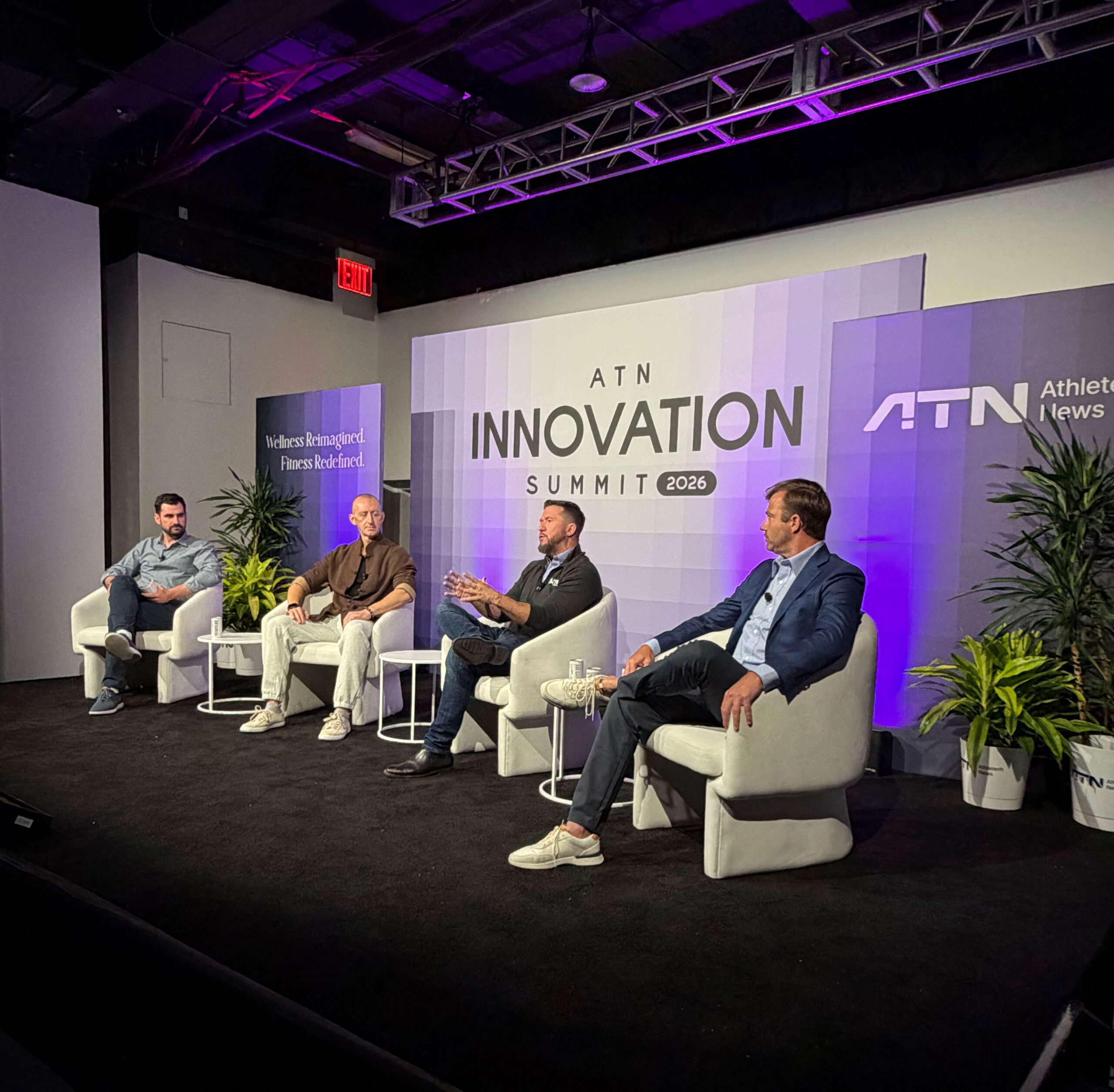
That question was at the center of the “Inside the AI Revolution in Fitness” panel at the 2026 ATN Innovation Summit. The discussion brought together leaders from across the fitness technology industry to explore how operators can approach AI in a practical, sustainable way.
Key Facts:
2026 ATN Innovation Summit: June 16–17, New York City
- Panel: Inside the AI Revolution in Fitness
- Core themes: AI adoption, data, people, member experience
- Main takeaway: Start with a defined business problem, measure results, then scale.
- Three adoption priorities: Business use case → Data foundation → Employee adoption
AI Adoption Starts with Strategy, Not Technology
With new AI tools emerging every day, it can be tempting for businesses to try everything at once. But the panel emphasized that a successful AI strategy starts by identifying a specific business challenge and determining whether AI can help solve it.
Instead of asking, “How can we use AI?”, fitness operators should start with a more focused question: “What problem are we trying to solve?”
A practical approach is to start small, test a use case and measure the results before expanding. This allows organizations to build confidence while learning what works for their teams and their business.
For example, fitness operators might begin by exploring AI for:
- Content and social media creation
- Email communication
- Internal productivity
- Administrative workflows
- Repetitive or time-consuming processes
The goal isn’t to implement AI simply for the sake of using AI. It’s to find opportunities where AI technology can create meaningful value.
Starting with a focused use case can also help organizations build internal momentum. When employees see how AI can make a specific part of their job easier or more efficient, it becomes easier to demonstrate its broader potential.
What data do Fitness Operators Need for AI?
As operators consider how to use AI in their fitness business, technology should only be one part of the conversation. Data powering technology is just as important.
A strong data strategy can provide the foundation organizations need to make AI more useful, particularly when it comes to understanding and engaging gym members.
For fitness businesses, this means thinking beyond collecting member data. Operators need to understand what data they have, how it connects across systems, and how they can use it to make better decisions. This kind of AI-driven member retention insight is one of the most cited use cases for AI in the fitness industry today.
When businesses have a strong understanding of their customer data, AI can help surface insights that may otherwise be difficult to identify. That could include recognizing patterns in member behavior, identifying members who may be at risk of churning, or informing more personalized communications.
This creates an important connection between AI, data, and member experiences.
Rather than reacting after a member has already disengaged, operators can work toward using data to identify opportunities to intervene earlier and create more meaningful connections.
A thoughtful data strategy becomes increasingly important as AI adoption in fitness grows. Data quality, connectivity, and governance can all influence the quality of the insights and recommendations AI produces.
In other words, AI can help fitness operators work smarter, but it needs the right foundation to do so.
Takeaway:
AI TipBuild a data foundation that allows AI to deliver meaningful, long-term value for both your business and your members.
Successful AI Adoption Is About People
Technology may be driving the AI conversation, but the panel highlighted another critical factor in success with AI adoption: people.
Introducing a new AI tool can create excitement, but it can also create uncertainty. Employees may wonder how AI will change their role, whether the technology is replacing tasks they currently perform or whether they are expected to immediately become experts.
AI adoption is more likely to succeed when employees understand how AI technology can empower them, rather than feeling something imposed on them.
For leaders, that means creating opportunities for employees to experiment, ask questions, and understand how AI can support their day-to-day responsibilities.
One approach discussed during the panel was creating smaller groups of employees who can explore new AI tools first. These early adopters can become internal advocates who help demonstrate the technology’s value to the rest of the organization.
This type of approach can turn AI adoption from a top-down mandate into something employees actively participate in.
Change management may be one of the biggest challenges organizations face when implementing AI in a fitness business.
The technology itself may be relatively easy to introduce, but getting people comfortable with new ways of working requires communication, education and time.
How does AI improve Fitness Member Experiences?
Set realistic expectations around AI in fitness. Simply turning on an AI-powered feature doesn’t guarantee increased retention, higher satisfaction, or additional revenue.
For example, an AI coaching tool won’t automatically transform a member’s experience simply because it is available. Operators need to think about how the technology will be introduced, how staff will use it and how members will be encouraged to engage with it.
That makes staff training an essential part of AI adoption in fitness.
Employees need to understand what technology does, how it can support their role, and how they can communicate its value to members. Personal trainers should see AI as a resource that can complement their expertise rather than a threat to their role.
The human element remains critical.
Takeaway:
AI TipAI can help teams become more efficient and provide new ways to support members, but successful implementation requires people to understand the technology and incorporate it into the member’s experience.
The result isn’t a choice between technology and human connection. The opportunity is to use AI technology to strengthen the human connection that is already at the heart of fitness.
How should Fitness businesses start using AI?
For operators wondering where to begin with AI adoption, the panel offered a practical framework:
1. Identify one problem to solve
Start by identifying a specific process that creates friction, takes significant time, or could benefit from greater efficiency. Begin with the business challenge.
2. Measure before you scale
Before expanding an AI initiative across the organization, look at the results. Did it save time? Improve workflow? Make it easier for employees to do their jobs? Create a better experience for members?
Use those insights to determine what should happen next.
3. Start with a small group
Give a small group of employees the opportunity to test and learn the technology. These early adopters can provide feedback, identify potential challenges, and become advocates for broader adoption.
The Future of AI in Fitness Is About More Than AI
The AI revolution in fitness is already underway, but successful adoption won’t come from simply implementing the newest technology.
It will come from organizations that take a thoughtful approach:
- Connects AI to clear business objectives,
- Builds on a strong data strategy
- Brings employees along through training and change management.
For fitness operators, the opportunity is to use AI to make teams more effective, create more personalized member experiences, and uncover insights that can support better business decisions.
The question is no longer whether AI will play a role in the future of fitness. The opportunity now is to determine how to implement it in a way that creates sustainable value for businesses, employees, and members.
Takeaway:
AI TipSuccessful AI adoption in fitness starts with a defined business problem, measurable outcomes and a controlled test; not simply adding an AI feature.
FAQs
How should fitness businesses start using AI?
Fitness businesses should start with one defined business problem; test a focused use case, measure the result, and expand only when the evidence supports it.
What data do fitness operators need for AI?
Fitness operators need reliable, connected member and operational data that can be accessed, understood and governed across the systems that shape the member experience. This may include membership, attendance, engagement, billing, training, and communication data. When data is accurate, integrated, and consistently managed, AI tools can deliver more meaningful insights, support better decision-making, and create more personalized member experiences.
How can AI improve fitness experiences?
AI can help identify behavioral patterns, automate routine interactions, and deliver more personalized member communications. However, technology alone doesn’t guarantee better retention or satisfaction. Success depends on staff adoption, thoughtful implementation, and ongoing member engagement.
What role does data play in AI adoption for fitness businesses?
A strong, connected and well-governed data strategy is the foundation of successful AI adoption. It allows AI to generate accurate insights, support better decision-making and deliver more personalized member experiences, from retention efforts to targeted communications.
What should fitness businesses measure when testing AI?
Fitness businesses should measure the outcome tied to the original business goal, whether that’s time saved, improved workflows, employee adoption or a specific member experience metric. Focusing on clear, measurable results helps determine whether an AI solution is delivering real value.
Does AI replace the human element in fitness?
No. AI works best as a tool that supports staff expertise and enhances the member experience, not as a replacement for human interaction. As discussed at the 2026 ATN Innovation Summit, the most effective AI strategies strengthen the human element of fitness by helping staff work more efficiently and focus on building meaningful member relationships.
About Xplor Technologies
Xplor Technologies helps businesses powering everyday life simplify operations through software, payments, and AI-driven solutions. The company serves more than 130,000 businesses globally and recently announced a material eight-figure investment in AI innovation across its platform portfolio.

by Xplor
-
First published: September 21, 2026
Written by: Xplor